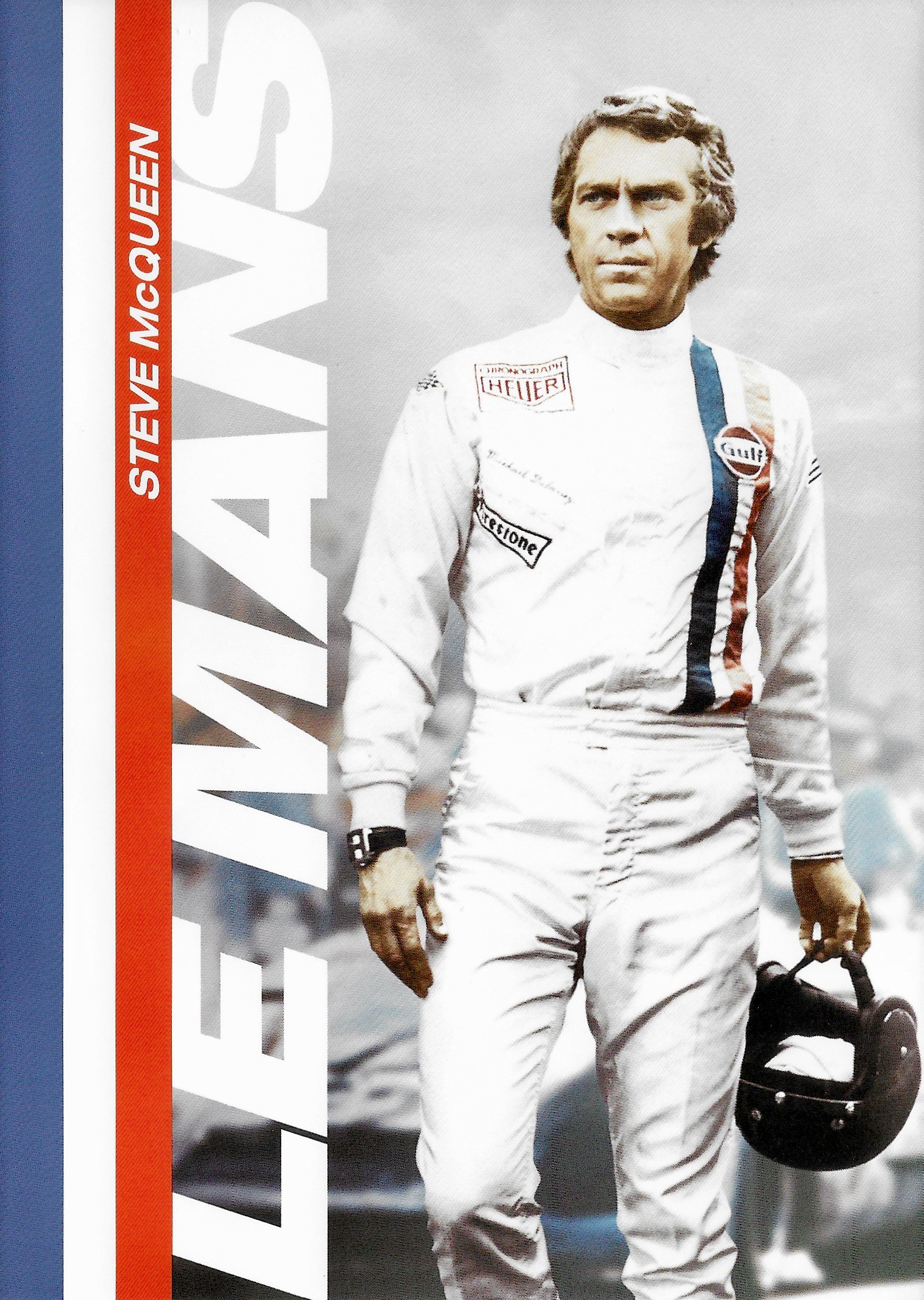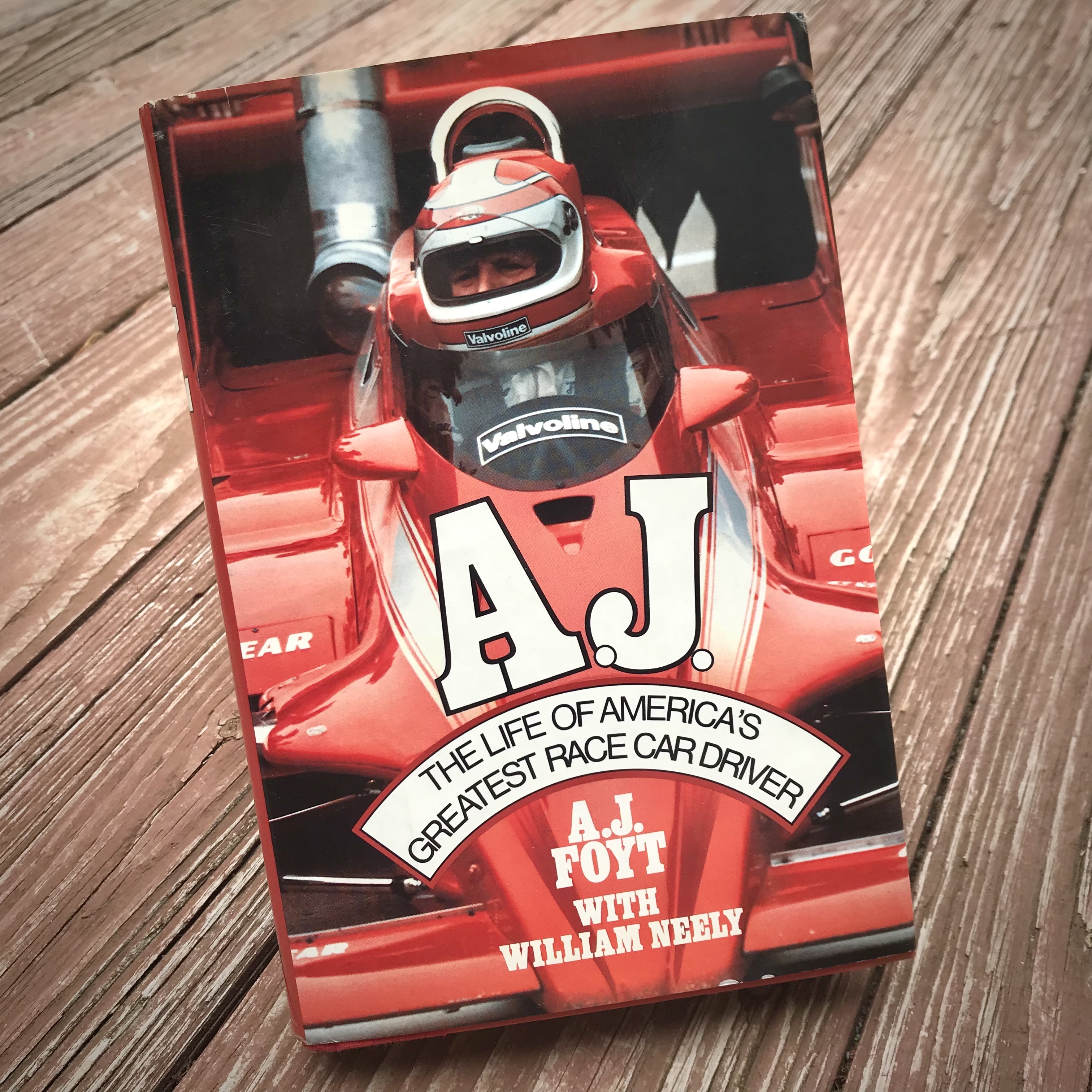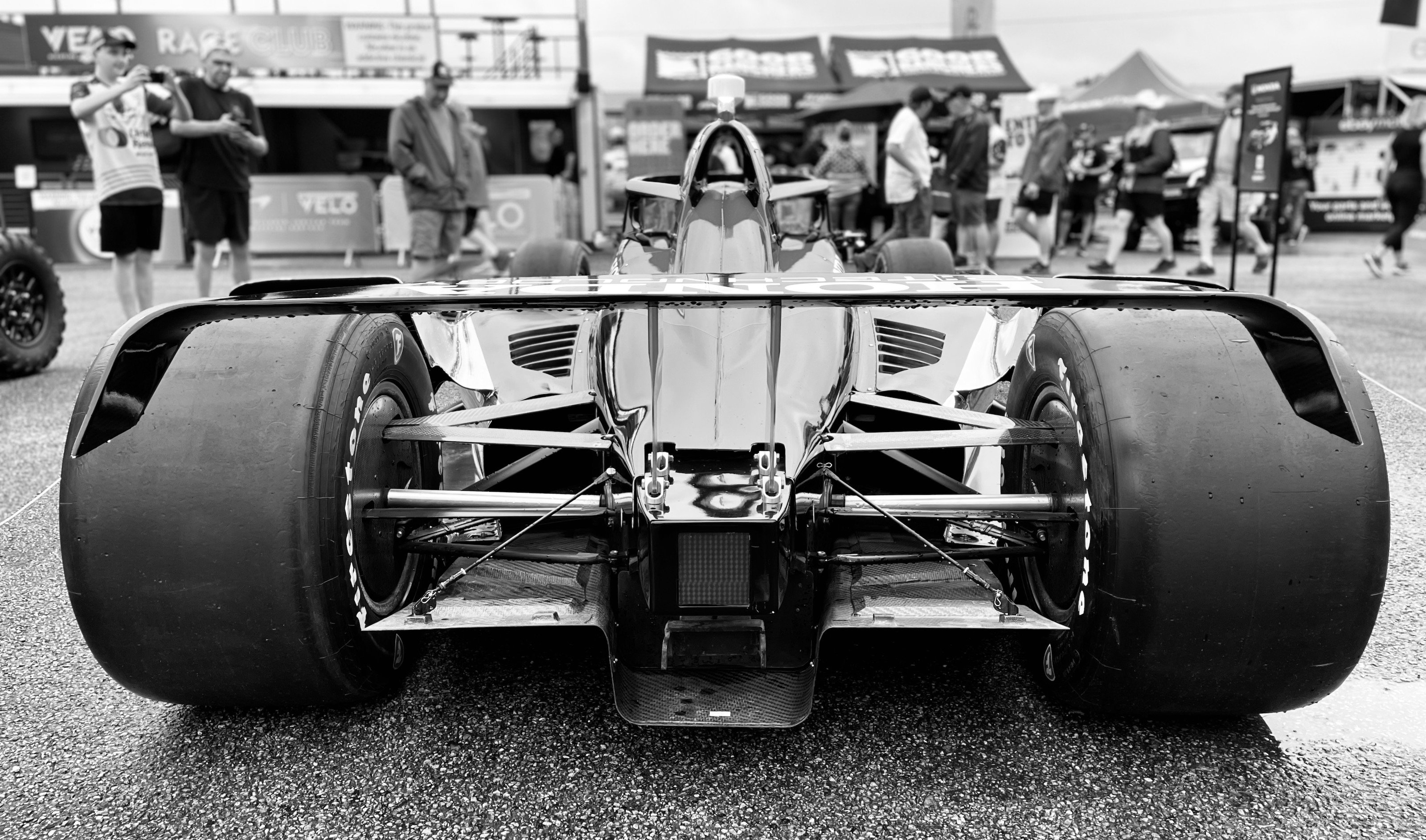
Earlier today it was reported that the FOM (Formula One Management, F1 teams basically) declined, rejected, refused the entry application of the Andretti Formula Racing LLC to join the Formula One grid. Their statement included nonsense to the effect that they didn’t believe the entry would be competitive. That almost made me laugh out loud when you consider over half the grid of 20 cars in each F1 race has not a prayer to win. No, this is all about money, greed, and snobbery. I hope Michael Andretti and his group (to include General Motors) turn their sights on the WEC (World Endurance Championship) and go win the 24 Hours of Le Mans outright. I hope they expand their highly successful portfolio of racing series involvement and go NASCAR racing. Wouldn’t it be nice to see the Andretti name win the Daytona 500 again, like Mario did in 1967. F1 damaged their credibility with this decision. Had it not been for the highly popular Netflix series ‘Drive to Survive’, with its manufactured drama, their popularity would be considerably diminished. Because, in reality, the actual races are usually snoozers.
IMSA Rolex 24 botched finish
The sports car season got underway last weekend in Daytona with the ‘twice-around-the-clock’ endurance classic, the Rolex 24. IMSA’s ‘Super Bowl’ kicked off the year in grand style. 59 cars took the green on Saturday (1/27), representing four classes (GTP, LMP2, GTD Pro, and GTD). It was an action-packed race that saw the Porsche Penske Motorsports (#7) Porsche 963 take the checkered flag, with drivers Dane Cameron, Felipe Nasr, Matt Campbell, and Josef Newgarden. One small detail about the finish…they didn’t go 24 hours. Unfortunately, human error stepped in, and the checkered flag was waved one lap too early. The winning time was 23:58:24. Race fans on social media went berserk. Some even wanted a do-over if you can imagine that. IMSA later came out with a statement admitting the error. Thankfully the rulebook has a clause that covers such things, and the results are final. These types of mishaps have happened before, and this probably won’t be the last. But could it be time for race series to consider alternative safeguards to be put in place to eliminate such errors. This was the first race of the year, imagine if this was a battle for the championship in the last race of the year.
Netflix NASCAR show
The new Netflix series ‘NASCAR: Full Speed’ debuted last night (1/30). The show features star drivers: Ryan Blaney, William Byron, Ross Chastain, Denny Hamlin, Bubba Wallace, Kyle Larson, Christopher Bell, Joey Logano, and Tyler Reddick in their quest for the 2023 NASCAR Cup Championship. It includes amazing racing footage, along with fascinating behind-the scenes storylines. I’ve watched one episode so far and it’s amazing. I highly recommend it!
Victory Lane Magazine – January 2024: Volume 39, No.1
Summit Point Motorsports Park, Summit Point, WV, November 17-19, 2023
Story by Terry Johnsen
Once again, the vintage racing season has drawn to a close. In general sports terms that conjures up thoughts of ‘the grand finale’, the fantastic finish that crowns a champion, or the gala event with all its bells and whistles. The fine folks of Vintage Racer Group (VRG) for years have chosen to take a different path to commemorate the end of their season. The Turkey Bowl at Summit Point Motorsports Park, a week before Thanksgiving, is a race meeting to savor the fun and comradery of fellow racers and friends one last time. Like a collective deep breath to appreciate each other and their shared love of racing competition.
I asked John Wood, current VRG President, what makes the Turkey Bowl the Turkey Bowl? He thought for a moment and said, “It’s a low-key event, it’s as much about the people as the cars. It’s a social thing, getting the cars out one more time before the snow flies, and to hang out with your friends.” And in that spirit VRG and their members will come together on Saturday night to celebrate a great year, give out a few awards and satisfy their palate with a good old-fashioned chili cookoff. John went on to say that 2023 was a good year for VRG, with increased participation at every event, and that financially they’re in solid shape. Looking forward John told me that the 2024 VRG will feature the same dates and same tracks as this year. Which is a welcome sign of stability for any racing series.
A bit of sadness played a part in the 2023 season, as two of VRG’s nine original founding board members died this year. First, Brad Marshall passed away mid-year. John noted that Brad was a driving force to get VRG started in 2004, with his focus on safety. Brad was the one who said, “let’s do this!” Then in late August, Tivvy Shenton passed away. John said “Tivvy was the one original board member that was most continuously involved from day one and remained active through this year.” VRG has come a long way, supported by the solid leadership of its founders. Their beloved memory was on the minds of all Turkey Bowl participants this weekend.
Five race groups defined the on-track activity for the weekend: Group 1 (VRG Small Bore), Group 2 (VRG Open-Wheel), Group 3 (VRG Medium/Big-Bore), Group 4 (Modern Sports/GT), and Group 5 (Legends). The weekend schedule was a straightforward and simple affair. Friday consisted of registration, tech inspection, and some limited practice. Saturday’s activity was pure racing, beginning with a warmup session, followed by a round of qualifying, then a race for each group after the lunch break. Sunday’s activities featured three special ‘Festival’ race events.
Group 1 held their race just after the lunch break. It was basically over before it began, with two separate black flags (the first after lap one and the second after lap four) ultimately stopping the race. Setting the pace from the drop of the green flag was Andrew Moore (#79) in his 1964 Austin Healey Sprite. He was followed closely by Jesse Darrow (#51, 1965 Triumph Spitfire) and Mark Gobble (#59, 1959 Elva Courier). It was in this order they finished race when it was called, due to multiple cars off-track.
Group 2 then took to the track and ran a clean race throughout. Josh Lewis (#812) stormed away from the field in his 1985 Lola T598. His fastest lap of the race was an impressive 1:19.496. Steve Byrne (#23, 1984 Swift DB1) and Leon Hodges-Austin (#45, 1978 Zink Z10 C) finished second and third respectively, drawing away from the pack and running by themselves for much of the race. The hottest battle in this group was for fifth place, waged between Dennis Austin (#5, 1976 Zink Z10-A) and Andrew Graham (#7, 1986 Van Diemen 1600), finishing in that order.
Group 3 presented a huge field of 37 cars for the race. Cord Kisthardt (#69) started on pole in his 1968 Chevrolet Corvette and cruised to an easy victory. But early on he withheld a serious challenge by second place runner, Todd Reid (#61, 1995 Honda Civic DX), who even took fastest lap on the 4th circuit of the race. During laps 3-5 the two drivers were nose-to-tail. Lap six is when Reid’s car began to fail him, and he eventually fell through the field out of contention. James Glass (#11, 1965 Chevrolet Corvette) inherited second spot, while Scott Krueger (#22, 1972 Porsche 914-6) improved to hold on to third position. Drivers finishing in positions 4-23 were a lap down, while the rest of the cars were further afield.
The race for Group 4 was a bit of a headscratcher, in terms of the official results posted by MyLaps. Their listing had Qais Musmar (#34) winning in his 1973 Porsche 911, followed by Andrew Mistak (#17, 2013 Chevrolet Camaro TA2) in second and Thomas Beverly (#4, 1992 Honda Civic) in third position. This writer was in the scoring booth lap counting, watching Mistak (#17) dominate the field, building a healthy gap till lap 8 when he pulled in for a brief stop. He reentered the race in third position, with Musmar (#34) in the lead and Graham Fuller (#22, 1992 Toyota Tercell) in second position. It stayed that way for a few laps until a black flag came out on lap 11 because Michael Ballo (#135, 1974 Porsche 911) spun and collected the inside retaining wall on the front stretch, losing his front bumper along with other assorted parts strewn all over the track. The entire field was then brought onto pit lane while the clean-up was underway. When the cars were released to resume the race, the order passing the start-finish line was #22, #17, #4, #0, and Musmar (#34) in fifth position. When they took the green flag the next time by, Mistak (#17) was in the process of passing Fuller (#22) for the lead. On lap 17, Beverly (#4) passed Fuller (#22) for second. At the checkered flag Mistak (#17) was the winner, and class of the field. I had Musmar (#34) moving up to fourth position, last car on the lead lap. My old-school lap-counting process in usually spot-on, so I’m at a loss as to why there’s a discrepancy in the transponder readings, but there you have it.
Then came group 5. If you’d put your money on #8 you could have won a bunch of money, for there were plenty to pick from. The winner of the contest was Tyler Hughes (#8h) in his 1934 Ford Legend. For much of the race he was followed closely by Mike Weddell (#8m, 2014 Legend Ford) and Connor Weddell (#8c, 2014 Legend Ford). Ultimately David Markham (#10, 2014 Legend Chevy Coupe) claimed second position with Mike Weddell (#8m) settling for third spot. A great day of racing was in the books, now it was time for some chili!
The highlights for Sunday’s activity centered on the three Festival Events. First on track was Group 2 for the Formula Festival race. Steve Byrne (#23) cruised to the win in his 1984 Swift DB1. He had Leon Hodges-Austin (#5, 1978 Zink Z10 C) in his mirrors throughout the race but provided no serious threat, even though Leon captured the fastest lap of the race with a 1:21.657. Tim Hannen (#0, Ford Hawke DL17) rounded out the podium in third.
Next up was the Vintage Festival, featuring cars from Group 1 and Group 3. An incredible field of 54 cars took the green flag. Todd Reid (#61) set the pace in his 1995 Honda Civic DX. He secured the fastest lap with a 1:27.028 and went on to capture the win. James Glass (#11, 1965 Chevrolet Corvette) and Scott Krueger (#22, 1972 Porsche 914-6) put in strong showings, taking second and third finishes respectively.
Closing out the Sunday Features were the racers from Group 4 and Group 5 in the Modern Festival. Qais Musmar (#34) piloted his 1973 Porsche 911 in a close fought race for the win. He was followed across the line by Tyler Hughes (#8h, 1934 Ford Legend), 1.531 seconds back. Connor Weddell (#8c, 2014 Legend Ford) claimed a respectable third position.
The Turkey Bowl concluded as the sun faded on the horizon. Another successful VRG racing season finished, not as a grand finale, but as a satisfying get-together with friends before the first pesky winter snowflakes make an appearance. This may be a ‘low-key event’ as VRG President John Wood put it, but it’s also the perfect opportunity for everyone to savor the moment, give thanks, and to appreciate each other and their shared passion of racing. On to 2024!
September in Watkins Glen, my favorite time of year. Once again the crew gathered for our yearly brush with racing history. We were very fortunate with the weather, in that it always rained where we were not. You can’t argue with that. It was a weekend to enjoy the sights and sounds of race cars, delicious food and beer, and the camaraderie of good friends. The following are a few photos from the International Motor Racing Research Center, the downtown street party known as the Watkins Glen Grand Prix Festival, SVRA’s US Vintage Grand Prix/Speedtour, and the Seneca Lodge Bar and Restaurant. Enjoy, we did! TJ….2023
On The Grid at IMRRC, 1924 Dundee Dodge.Under the hood of a 1965 Shelby Cobra.Lined up for the Grand Prix Vintage Festival is a 2009 Porsche Cayman.This 1969 Corvette was one of many celebrating the 75th Anniversary of the marque.1979 Crossle 35F (#414), 1977 Crossle 32F (#127), 1983 Lola T642 (#189).NASCAR thunder. Rusty Wallace’s 1993 Pontiac Grand Prix.2015 Ford Mustang (#48), 1971 Chevron B19 (#33), 2014 Radical SR3 (#46).Finishing off the weekend at Seneca Lodge Bar & Restaurant.
The Charles Town Car Show in West Virginia made such a positive impression on me in 2022 that I made sure to mark it on my calendar this year. It was a fantastic turnout, and seemed to be even bigger and more well-attended than last year! There were loads of beautifully-prepared roadsters, hot rods, and classic cars, along with a wide-variety of incredible food vendors. Combine that with a bright and sunny day, it resulted in a fun and memorable festival atmosphere for everyone. Here are a few snap-shots from my stroll along Washington Street. Enjoy. TJ….2023
1970 Chevy Chevelle1956 Chevrolet 2101932 Ford Coupe1956 Mercury Medalist1970 Dodge Charger 500A car show isn’t complete without ‘The Batmobile’!
Victory Lane Magazine – July 2023: Volume 38, No.7
Summit Point Motorsports Park, Summit Point, WV – May 19-21, 2023
Story by Terry Johnsen
Gary Reed #16, 1969 Datsun 510
Just a short trip from the nation’s capital, nestled in the rolling hills of West Virginia, sits Summit Point Motorsports Park. The mid-Atlantic region of the United States loves their sports car racing. So annually, in the month of May, passionate sports car enthusiasts gather at Summit Point for the traditional Jefferson 500. 2023 marks the 28th running of the event.
This year included a special feature with the inclusion of the Marlboro Motor Raceway Reunion. The gathering was hosted by noted Marlboro racetrack historian, Steve Lloyd. The link between Summit Point and Marlboro is significant, in that they each have served as the DC region’s ‘home track’ dating back to 1952 when Marlboro began their race activities. Marlboro eventually closed its doors in November 1969, just as Summit Point was making its mark on the racing scene. The racers instinctively moved their allegiance to Summit Point. When asked to describe the similarities between Marlboro and Summit Point, Lloyd chose the French phrase, ‘je ne sais quoi’, meaning he found it hard to accurately put it into words, but then added, with a smile, “it’s not the same feel, but pretty damn good”.
The Jefferson 500 is Vintage Racer Group’s marquee event, and each year it has gotten bigger and better. It’s a full week of activities for everyone. Tuesday began two busy days featuring the VRG Licensing School, along with registration, tech activities, and load-in of race trailers and equipment. Thursday got down to business with a full day of practice for all the group categories, along with school participants. The day concluded with a track walk.
Racing activities for the Jefferson 500 got underway Friday morning, May 19th, with timed qualifying sessions for all groups 1-6, finishing with a practice session for Group 7. The afternoon saw the running of the first sprint races, finishing with a Group 7 qualifying session. After track activities concluded, Steve Lloyd held an historical look-back at Marlboro Motor Raceway in the paddock classroom with his talk entitled, ‘Marlboro: The Mob, The Moolah, and The Madness’. It was a thrilling and insightful presentation. Vintage motor sport mainstay and reunion contributor, Bob Houston, described the reunion as fantastic! He said, “it was great to see people who hadn’t seen each other in over 20 years, sit down and talk”. He added, “I like the old saying…the end product of motor racing are race stories”. He summed it up perfectly.
Vintage Racer Group has long honored the history of sports car racing by featuring the names some of the great competitors of the past to identify their race groups. Names such as John Wyer, Briggs Cunningham, Mark Donohue, Phil Hill, Charlie Gibson, Lola sports cars, along with a nod to Marlboro Motor Raceway. The Sunday Enduro’s also pull from the legends of the sport with names such as Brian Redman, Dan Gurney, and Bill Scott.
Saturday afternoon was highlighted by the running of the feature races. First on the docket was Group 1 (Wyer Cup) for the IMSA RS – 2.5 Challenge. Steve Byrne (#3) was the class of the field driving his 1970 Datsun 510. It was a dominant performance which saw him capture the fastest lap of 1:26.592. Byrne captured fastest laps of the two sprint races as well. His main rival of the weekend was David Porter (#58) in a 1973 Ford Escort RS1600. He came second to Byrne in the feature event and the Friday sprint race. Porter found the top step of the podium in the Saturday morning sprint.
Next came the competitors of Group 2 (Cunningham Cup) for the Big Bore cars. Clarke Ohrstrom (#72) drove his 1971 BMW 3.0 CSL to victory, securing the fastest lap of 1:24.492 along the way. This was his best result of the weekend. Douglas Hagopian (#24), driving a 1974 Porsche 911 came in second, and bettered that by winning both of the sprint races.
Third on the schedule of feature events was Group 3 (Marlboro Cup) for Small Bore over 1.3L cars. Robert Andersson (#78) piloted his 1970 Vitesse Sports Racer for the win. He also claimed fastest lap with a time of 1:28.365. Mike Moore (#167) was right on Andersson’s tail in a 1962 Triumph TR4 finishing second. Moore also won both sprint races.
Next on track was Group 4 (Lola Cup) for Small Bore under 1.3L and Formula Vee cars. Will Thomas (#191) won the event behind the wheel of his 1965 Austin Cooper S. The fastest lap of the race was set by David Gussack (#188), driving a 1963 Triumph Spitfire. He dropped out at the midpoint of the race. But Gussack showed his pace earlier by capturing both Friday and Saturday morning sprint events.
Immediately following, the cars and drivers of Group 5 (Donohue Cup) for Production and Specials through 1960 rolled out for their race. John Styduhar (#9) bested the field in his 1962 Triumph TR3B, which included taking the fastest lap with a time of 1:33.309. Styduhar battled with Vic Schuster’s (#57) 1957 Triumph AMBRO for first and second all weekend. Schuster took the win in the first sprint race, while Styduhar edged him out in the second sprint.
Later that afternoon saw the running of Group 6 (Gibson Cup) for Sports Racers and Non-FFCS Open Wheel cars. Brandon Weber (#8) rocketed his 2004 Carbir CS2 around the track, leaving the rest of the field to battle amongst themselves. Weber set a fast lap of 1:15.584, which was the top time of the entire weekend. He was in a class of his own, finishing a lap ahead of the second-place finisher. Weber swept the weekend sprint races as well.
The final feature race of the day was Group 7 (Phil Hill Cup) featuring the Formula Ford Challenge Series. The highlight of any VRG event is when the cars and drivers of Group 7/FFCS take to the track. It is extremely competitive racing, and with a stacked field anyone can win. 37 starters took the green flag. Scott Fairchild (#20), driving his 1978 Zink Z10 won the closely contested event, just ahead of second place finisher Doug Meis (#27) in a 1974 Lola T340. Third place finisher Chris Fahan (#70) captured the fastest lap of 1:25.594 in a 1981 Van Dieman RF81. 39 cars ran in the Saturday morning sprint race, won by Leon Hodges-Austin (#6), driving a 1978 Zink Z10 C. Stefan Vapaa (#97) won the Sunday sprint race with his 1969 Macon MR7.
The Sunday morning enduro events allowed the cars and drivers to stretch their legs one last time. Douglas Hagopian (#24) won the Brian Redman Enduro (Groups #1, #2, #6 closed wheel only) in his 1974 Porsche 911. David Biegert (#1) won the Bill Scott Enduro (Group #3, #4, #5), with his 1990 Mazda Miata. Doug Meis (#27) won the Dan Gurney Enduro (Groups #6, #7 open wheel only) driving a 1974 Lola T340. By early Sunday afternoon a dwindling field of drivers took to the track one last time for the All-Comers Sprints, but by then everyone seemed to have had their fill. Stuffed with lasting memories from another memorable Jefferson 500.
It’s these types of events that make vintage racing so attractive to the racing enthusiast. The Jefferson 500 is a fun event, a social event, a feel-good type of event. From this, old friendships are rekindled, and new connections are made. It brings me back to Bob Houston’s wise words, “the end product of motor racing are race stories”. For sure another wonderful chapter of race stories were written at this year’s Jefferson 500.
It was great to be back at a racetrack. My first vintage event of the year. It’s been far too long of a break for me. The Jefferson 500 presented by VRG proved to be the perfect reboot. It’s a can’t-miss event. Here are a few photos from Friday’s activities. The race review will follow in short order. Enjoy. TJ
1964 Alpine M641967 Porsche 911S/2.3L1969 Macon MR7B1968 Chevrolet CorvetteThe Lambretta TV175 – The only way to get around the paddock!
A Conversation with Mark Steigerwald, Executive Director, International Motor Racing Research Center
By Terry Johnsen
Victory Lane Magazine, November 2022, Volume 37, No.11
Located just a few blocks from the first corner of the original grand prix course in Watkins Glen (New York) is the International Motor Racing Research Center (IMRRC). You’ll find it tucked away on a quiet street, amongst large shady trees, adjacent to the local public library. Having attended many races at Watkins Glen International (WGI) as a spectator and while reporting on vintage events, I was surprised that a large portion of people I spoke with, both competitors and spectators, had either not known about IMRRC or had not taken the time to stop by and find out more about it.
So, with that in mind, I sought out the research center’s Executive Director, Mark Steigerwald, to have a conversation and learn more about it. He summed it up best by describing IMRRC as “a hidden gem”. I couldn’t agree more. The research center offers so much for anyone who walks through their doors. Whether it be historians, writers, racing enthusiasts, families looking for information on their racing heritage, or tourists to the Watkins Glen area, IMRRC has something for everyone. In other words, you name it they’ve got it! Our discussion touched on various aspects of the research center, how people can become involved, upcoming events, and even a teaser of exciting news for 2023.
Mark said The International Motor Racing Research Center came about through the collective efforts of Jean Argetsinger (wife of Cameron Argetsinger, the visionary who brought road racing to life in the post-war years of World War II), John Saunders (then President of Watkins Glen International), along with civic and community leadership, in their effort to mark the 50th anniversary of racing at Watkins Glen. The local public library was chosen to house the original holdings, and in 1998 ground-breaking took place to expand the collection to its current footprint of 5,500 square feet of space adjacent to the library.
Mark said his was a roundabout path in becoming Executive Director. He graduated from Syracuse University in 2000 with a master’s degree in Library Science. While at the track in 1998 for an event Mark heard about the creation of the research center and learned that it was part of the Watkins Glen Public Library. He saw this as a great opportunity and was able to fulfill his internship at the library. It was such a great fit that he stayed for eight years working at IMRRC. Mark described this period of his career as his most fulfilling. Later he saw the opportunity to return and was selected to his current position as Executive Director in 2021. Mark described his duties as being responsible for the general oversight of day-to-day operations. That puts in mildly, for the scope and depth of IMRRC’s holdings cover literally every aspect of motor racing both locally and internationally. Mark explained the research center is a library and archive, open to the public, providing research services to a wide audience. Along with its large collection of books, publications, and photographs there are exhibits of racing memorabilia, exciting historical films to view, all capturing the heritage of racing at Watkins Glen. There is also a racing car on display, ‘On The Grid’, in the center foyer. Throughout the year many historic cars have the honor of being placed center stage. The current car is a 1985 Mustang GTO, formerly driven by Canadian John Jones and Lyn St. James in IMSA competition.
The IMRRC website’s About Us section is entitled ‘Collecting, Preserving and Sharing History’. Mark noted they have a lofty mission, which in turn has driven a varied collection. The research center presents the story of racing history at a local level, along with each series that have participated at The Glen, such as Formula One, NASCAR, IMSA, IndyCar, and amateur sports cars. Mark noted they also oversee the management of the SCCA’s vast archive. He described the research center as a public-facing proven research service, adding “a service that is free”. For anyone interested in how they can go about using their services he suggested contacting Head Archivist, Jenny Ambrose, via email (jenny@racingarchives.org).
Mark noted IMRRC relies upon the charitable contributions of motor racing enthusiasts. There are many options to donate financially through various levels of membership, along with the donation of books and publications, and other racing memorabilia and materials. Mark says their staff is always looking to fill the gaps of the collection. The yearly car sweepstakes is an annual tradition and a great fundraising tool, which brings about recognition to the center, along with opening the door for further discussion of their cause. This year’s sweepstakes involves a 2022 IMSA GTLM C8.R Limited Edition Corvette! It’s a gorgeous car, silver with yellow racing highlights. It looks fast just sitting still! Mark noted there’s plenty of time to buy a ticket, via the website (www.racingarchives.org). The drawing is in December. Another featured fundraising event is the presentation of the Cameron R. Argetsinger Award for Outstanding Contributions to Motorsports, presented each year at the IMRRC Award Dinner. This year’s honoree was Mike Helton, Vice Chairman of NASCAR. Past recipients of this distinguished award have been Richard Petty (2015), Mario Andretti (2017), and Lyn St. James (2021), just to name a few.
Mark described the solid foundational structure of the research center, led by the Governing Council that consists of notable professionals in motorsport, business visionaries, along with passionate leadership from the local community. Together they present a broad skill set of experience. The Drivers Council provides support through their experience and knowledge of the sport, and they also help lead the annual appeal for membership. The current driver’s council consists of Mario Andretti, David Donohue, Chris Dyson, Hurley Haywood, Scott Pruett, Brian Redman, Lyn St. James, and Rusty Wallace. That’s a Who’s Who list if there ever was one! The Historians Council provide advice and guidance on the collection, and includes motorsports historians, journalists, and authors. Mark noted one of the council members is the respected IMRRC and Watkins Glen racing historian Bill Green.
This year on November 4th and 5th, the Michael R. Argetsinger Symposium on International Motor Racing History will be held at the WGI Media Center. This will be the sixth collaboration between IMRRC and the Society of Automotive Historians (SAH). The event honors the memory of Michael Argetsinger, son of Cameron Argetsinger. Michael was a prolific author and passionate historian of motorsport who sadly passed away in 2015. The symposium is open to the public and is a must-see event for any motor racing enthusiast. This wonderful two-day program will consist of in-depth scholarly presentations from leading motorsport historians from around the world. 2022 will also be the first year the symposium will be live-streamed, via the support and technical expertise of Gran Touring Motorsports. The link will be available on the IMRRC website (www.racingarchives.org). Mark noted that Buz McKim, NASCAR historian, will give the keynote presentation, entitled “Moonshine and Its Connection to the American Auto Industry”. Having attended the symposium myself in the past, I can attest that it is a wonderful and enlightening experience. With the added feature of being live-streamed, it will hopefully reach an even wider audience. And for those who cannot attend or tune in live, recordings will be available on their website in the IMRRC live-stream archive for your viewing pleasure.
As we brought our conversation to a close, Mark stated “the future looks bright in a big way”. He noted there is an exciting announcement in the offing regarding expansion, adding “watch this space!” 2023 will be a big year for celebration, for it will mark the 25th anniversary of the research center and the 50th anniversary of racing in Watkins Glen. Along with these celebrations, the yearly Watkins Glen Grand Prix Festival in September will also highlight the 75th anniversary of Porsche and the 70th anniversary of Corvette. Mark hinted at the theory that Corvette’s creator, Harley Earl, may have drawn inspiration for the Corvette after attending a Watkins Glen Grand Prix, circa 1951. Having seen the foreign sports cars in action, Earl was believed to have said something to the effect of, “GM can do this!” The rest is history.
Finally, Mark stated the research center is open to the public, 9-5 Monday through Friday (with federal holiday exceptions of course). He invites everyone to visit the website, send an email, or just “Stop In!” IMRRC may very well be a hidden gem, but it’s also right before us all in plain sight. In addition, I encourage everyone to visit their Facebook, Instagram, and YouTube sites for all the entertaining, historical, and educational posts and videos that are available. IMRRC is an unbelievable and amazing resource that is there for everyone to enjoy.
The Grand Marshal for this year’s Watkins Glen Grand Prix Festival was none other than Al Unser Jr. He is a two-time Indianapolis 500 winner (1992 and 1994), a two-time CART IndyCar World Series Champion (1990 and 1994), a two-time IROC Series Champion (1986 and 1988), and the 1982 SCCA Can-Am Champion. These are just but a few of his racing highlights and achievements in an illustrious career.
I took this photograph at the 1986 Miami Grand Prix, which took place at Tamiami Park. It was just prior to the first practice session when I spotted him in the pits. He was just putting in his gloves. Afterwards he gave me a thumbs up! Unser Jr. went on to qualify 19th, and then won the race. 36 years later I was able to get him to sign it for me. It was worth the wait!
Back again for my favorite racing weekend of the year, in beautiful and historic Watkins Glen, New York. We were blessed with perfect weather, endless cars, sights and sounds, and plenty of beer and delicious local food. The activities kicked-off on Friday with the downtown Grand Prix Festival celebration. On Saturday and Sunday we headed up to the track for the SVRA US Vintage Grand Prix/SpeedTour. Here are a few photos, with more to come. Enjoy! TJ….2022
Judges evaluating a beautiful 1954 Jaguar XK120 OTS.This 1968 Chevrolet Camaro was part of the Historic Trans-Am series on hand for the festival.Me and the boys enjoying the view of Seneca lake.Fifteen historic Bugatti’s from the 1920’s/30’s were on hand and stretched their legs on track.Rusty Wallace’s 2000 “Miller Lite” Penske Dodge.Always one of my favorites, Brian Redman’s 1976 Lola 332C.
Labor Day weekend (Saturday) with nothing planned, so on a whim to attend the car show in Charles Town, West Virginia. Just about an hour away from home. I had heard good things about the car turn-out at earlier events, so I decided to give it a look-see. I’m so glad I did. There were so many well-prepared roadsters and hot rods, powered by lots of TLC. Here are a few shots from a stroll down Washington Street. Enjoy!
TJ…2022
1923 Ford T-Bucket, 1957 Chevy Bel-Air1935 Chevy 3-window1969 Chevy Camaro1969 Chevy Camaro…my favorite of the show1935 Chevy CoupeA RED-HOT Mercury 8!